
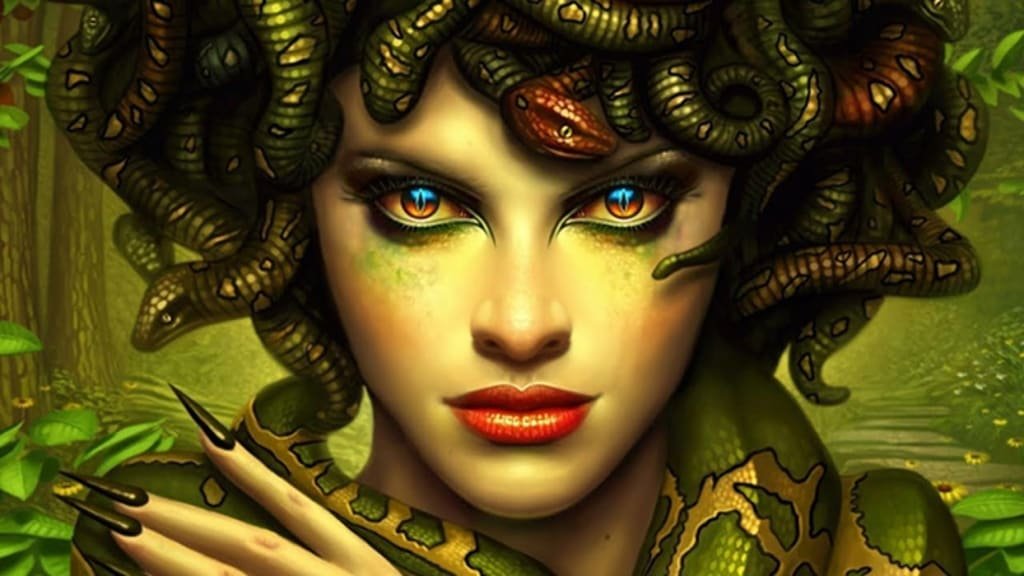
Throughout history, certain mythological figures have captured human imagination so strongly that their stories continue to influence art, literature, science, and culture for thousands of years. Among these legendary figures, few are as fascinating and mysterious as Medusa. Known for her snake-covered hair and the terrifying ability to turn anyone who looked directly at her into stone, Medusa has become one of the most recognizable characters in mythology. Yet her story is far more complex than the frightening image often portrayed in popular culture.
Over the centuries, Medusa has evolved from a terrifying monster into a powerful symbol in art, philosophy, and modern storytelling. Rare ancient artworks, unusual interpretations of her myth, and extraordinary archaeological discoveries have kept Medusa in the global spotlight. These remarkable representations reveal how a single mythological character can transform across cultures and eras, capturing the attention of scholars, artists, and audiences around the world.
The Mythological Origins of Medusa
The story of Medusa originates in the myths of Ancient Greece, where she was known as one of the three Gorgon sisters. Unlike her immortal siblings, Medusa was mortal. According to the most well-known version of the myth, she was once a beautiful woman who served in the temple of the goddess Athena. However, after a tragic encounter that violated the sacred temple, Athena punished Medusa by transforming her hair into living snakes and giving her the deadly gaze that turned observers to stone.
Over time, Medusa became a symbol of fear and danger, but also of protection. In ancient Greek culture, images of her face—known as the Gorgoneion—were placed on shields, armor, temples, and buildings to ward off evil spirits. The frightening image was believed to protect people from harm by scaring away negative forces.
Medusa’s story eventually reaches its climax when the hero Perseus defeats her by using a mirrored shield to avoid looking directly at her. With the help of divine tools and clever strategy, Perseus successfully beheads Medusa, ending her reign of terror but beginning a new chapter in the myth’s symbolic meaning.
Rare Ancient Art Depicting Medusa
Some of the most extraordinary representations of Medusa appear in ancient artworks discovered across the Mediterranean world. Greek and Roman artists frequently included her image on pottery, sculptures, mosaics, and architectural decorations.
One particularly famous example is the Medusa head sculpture located in the underground chambers of Basilica Cistern. In this historic structure, two enormous Medusa heads serve as column bases. One is positioned upside down, while the other lies on its side. Historians continue to debate why these statues were arranged in such unusual ways, adding to the mystery surrounding them.
Another remarkable representation appears in Roman mosaics found in villas and bathhouses throughout the ancient Roman world. These mosaics often show Medusa’s face surrounded by intricate geometric designs, suggesting that her image was believed to provide protection against misfortune.
These rare artworks demonstrate that Medusa’s image was not merely a frightening figure but also a powerful cultural symbol with protective significance.
The Transformation of Medusa in Renaissance Art
Centuries after the fall of ancient Greece and Rome, Medusa’s story reappeared in European art during the Renaissance. Artists of this period were deeply inspired by classical mythology and sought to reinterpret ancient stories through new artistic styles.
One of the most famous artistic depictions of Medusa was created by Caravaggio in the late sixteenth century. His painting of Medusa shows the moment immediately after her defeat by Perseus, capturing a dramatic expression of shock and pain. Painted on a ceremonial shield, the artwork combines realism and emotion in a way that was revolutionary for its time.
Caravaggio’s interpretation of Medusa attracted significant attention because it portrayed her not simply as a monster but as a tragic figure. This approach encouraged viewers to think more deeply about the myth and the themes of transformation, punishment, and power that lie within it.
Another Renaissance masterpiece inspired by the Medusa myth is the sculpture Perseus with the Head of Medusa by Benvenuto Cellini. This dramatic bronze statue stands in Florence and depicts Perseus triumphantly holding Medusa’s severed head. The sculpture represents the victory of courage and intelligence over danger.
Together, these works demonstrate how artists have continuously reinterpreted Medusa’s story across centuries.
Medusa as a Symbol of Power and Protection
Beyond art and mythology, Medusa has also become an important symbol representing strength, transformation, and protection. In ancient times, warriors sometimes placed the Gorgon’s image on shields or armor as a protective emblem.
The concept behind this symbol was simple but powerful: by displaying the face of a terrifying creature, a warrior could frighten enemies and protect themselves from harm. This protective image was widely used in architecture, jewelry, and ceremonial objects throughout the classical world.
Interestingly, Medusa’s symbolism continues to appear in modern design and fashion. One well-known example is the logo used by the fashion house Versace. The brand’s founder chose Medusa as the symbol because of her hypnotic power and unforgettable presence.
This modern interpretation reflects how the myth of Medusa continues to influence culture even in contemporary industries.
Scientific Curiosity and the “Medusa” Name
The fascination with Medusa extends beyond mythology and art into the scientific world as well. Scientists have often used mythological names to describe newly discovered species or natural phenomena.
One interesting example is the jellyfish genus known as Turritopsis dohrnii, sometimes referred to informally as a “Medusa stage” organism in its life cycle. In biology, the term “medusa” describes the bell-shaped stage of certain jellyfish, where their tentacles resemble flowing hair.
This scientific terminology reflects the lasting influence of mythology on modern scientific language. The visual similarity between a jellyfish’s tentacles and Medusa’s snake-like hair made the name particularly fitting.
These connections between mythology and science demonstrate how ancient stories continue to shape modern understanding of the natural world.
Modern Interpretations and Cultural Impact
In recent years, Medusa has experienced a resurgence in popularity within literature, films, and popular culture. Modern writers and filmmakers often reinterpret her story through new perspectives, exploring themes such as justice, empowerment, and misunderstood identity.
Many modern interpretations focus on the tragic aspects of Medusa’s transformation, presenting her as a victim of circumstance rather than simply a villain. This shift reflects changing attitudes toward mythology and storytelling, where complex characters are often explored in greater depth.
Medusa also appears in contemporary video games, novels, and fantasy series, where she is sometimes portrayed as a powerful guardian or magical figure. These adaptations introduce her story to new generations, ensuring that her myth continues to evolve.
Even in academic discussions, Medusa remains a subject of fascination. Scholars study her story to understand how ancient myths reflect cultural beliefs about power, gender, and morality.
Why Medusa Continues to Captivate the World
The enduring fascination with Medusa comes from the powerful themes contained within her story. Her myth combines beauty, transformation, tragedy, and danger in a way that resonates deeply with human emotions and imagination.
Rare artworks, ancient sculptures, and modern interpretations have kept her story alive across thousands of years. Each new discovery or artistic representation reveals another layer of meaning behind the legend.
Medusa also reminds us that myths are not static stories; they evolve as cultures reinterpret them through new perspectives. What was once viewed purely as a terrifying monster can become a symbol of protection, power, or even resilience.
Ultimately, the rare and extraordinary representations of Medusa demonstrate the lasting power of mythology. From ancient temples to modern art galleries, her image continues to capture the attention of the world, reminding us that the stories of the past still shape the way we understand beauty, fear, and transformation today.





Leave a Reply